
French pedicure nails are a timeless nail style defined by a natural or sheer base color with clean white tips on the toenails. Known for their neat, elegant appearance, they remain one of the most requested pedicure styles worldwide—especially for people who want a polished look without bold colors.
While the concept sounds simple, the modern French pedicure has evolved far beyond the thick white tips of the past. Today, it’s about balance, proportion, nail health, and subtle customization.
This guide explains what French pedicure nails really are, who they’re best for, common mistakes to avoid, and how to get a result that actually looks professional—not dated.
Table of Contents
What Are French Pedicure Nails?
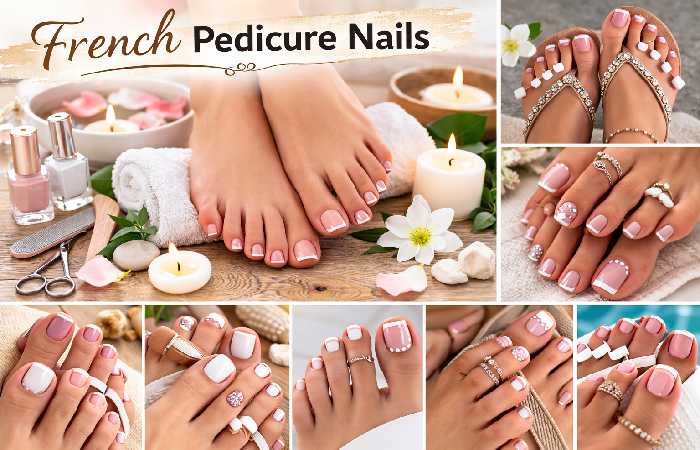
A French pedicure is a nail finish that combines:
-
A neutral, natural-looking base (sheer pink, nude, beige, or milky white)
-
Defined white tips applied neatly across the edge of each toenail
The goal is to enhance the natural nail, not overpower it. When done correctly, the nails look clean, balanced, and well-groomed rather than decorative.
Quotable definition:
French pedicure nails are a minimalist pedicure style that emphasizes natural nail tones with subtle white tips for a clean, classic finish.
Why People Choose French Pedicure Nails
The popularity of French pedicure nails isn’t accidental. They solve several real, everyday problems.
Key Benefits
- Timeless appeal – never looks out of place or outdated
- Low visual maintenance – chips and growth are less noticeable
- Matches any outfit or footwear
- Appropriate for all settings – work, weddings, travel, daily wear
- Makes feet look cleaner and more refined
For people who don’t want to constantly change colors or worry about trends, this style is a reliable default.
Who French Pedicure Nails Are Best For
French pedicure nails work especially well for:
- Professionals who need a neat, neutral appearance
- Brides or event attendees wanting elegant, distraction-free nails
- People who wear open footwear regularly
- Anyone new to pedicures and unsure which style to choose
- Those who prefer low-commitment nail looks
It’s also a safe option for salons and first-time clients because expectations are clear and results are easy to evaluate.
Who Should Be Cautious or Avoid It
French pedicure nails aren’t ideal for everyone in every situation.
Be cautious if you have:
- Very short or uneven toenails (tips can look thick or awkward)
- Discolored or damaged nails that need treatment first
- Active fungal infections (cosmetic polish can trap moisture)
- A preference for bold or expressive nail art
In these cases, nail health or alternative styles should come first.
Classic vs Modern French Pedicure Styles
Not all French pedicure nails look the same anymore. The style has quietly modernized.
Traditional French Pedicure
- Opaque white tips
- Pink or beige base
- Straight or slightly curved smile line
Modern Variations
- Ultra-thin white tips for a softer look
- Off-white or cream tips instead of stark white
- Milky, translucent bases
- Rounded or softly tapered nail shapes
- Minimal accents (single line, pearl detail, soft shimmer)
The modern approach focuses on subtlety and proportion rather than contrast.
Step-by-Step: How a Proper French Pedicure Is Done
A professional French pedicure isn’t just about painting white tips. The process matters.
1. Nail Preparation
- Nails are trimmed straight to prevent ingrowns
- Edges are gently filed and smoothed
- Cuticles are softened and pushed back (not aggressively cut)
2. Base Application
- A sheer or semi-transparent base coat is applied evenly
- Streaks are avoided for a natural finish
3. Tip Definition
- White polish is applied carefully along the nail edge
- Thickness is adjusted based on nail length
- Symmetry across toes is checked
4. Sealing & Protection
- A high-quality top coat is applied
- Nails are fully dried to prevent smudging
Precision, not speed, determines the final quality.
Common Mistakes That Ruin French Pedicure Nails
Even a simple style can go wrong.
Most Frequent Errors
- Thick, blocky white tips
- Uneven smile lines across toes
- Base color too opaque or too pink
- Poor nail shaping before polish
- Skipping proper drying time
These mistakes make the pedicure look outdated or amateur.
Myths vs Facts About French Pedicure Nails
| Myth | Reality |
|---|---|
| French pedicures are old-fashioned | Modern versions are minimal and current |
| White tips must be bright white | Softer whites look more natural |
| It works only on long nails | Proper proportion matters more than length |
| It’s boring | Subtle details add personality without loud colors |
How Long Do French Pedicure Nails Last?
On average:
- Regular polish: 2–3 weeks
- Gel French pedicure: 3–5 weeks with proper care
- Because the base is neutral, growth is less noticeable than with darker colors.
Care Tips to Make Them Last Longer
- Moisturize feet daily to prevent cracking
- Avoid tight shoes immediately after application
- Use a clear top coat every 7–10 days
- Keep nails clean and dry
- Avoid peeling or picking at polish
Healthy nails always make the style look better.
Are French Pedicure Nails Still in Style in 2026?
Yes—but with refinement.
Current trends favor:
- Clean, natural finishes
- Quiet luxury aesthetics
- Minimalism over statement designs
French pedicure nails align perfectly with these preferences, which is why they continue to appear in salon menus and fashion editorials worldwide.
FAQs
What are French pedicure nails?
French pedicure nails feature a natural base color with subtle white tips designed to enhance, not overpower, the toenails.
Are French pedicures suitable for everyday wear?
Yes. Their neutral look makes them ideal for daily use, work environments, and formal occasions.
Do French pedicure nails work on short toenails?
They can, but the white tip must be very thin to avoid a bulky appearance.
Is gel better than regular polish for a French pedicure?
Gel lasts longer and resists chipping, but regular polish is easier to remove and less drying.
How often should I redo a French pedicure?
Every 3–5 weeks, depending on polish type and nail growth.